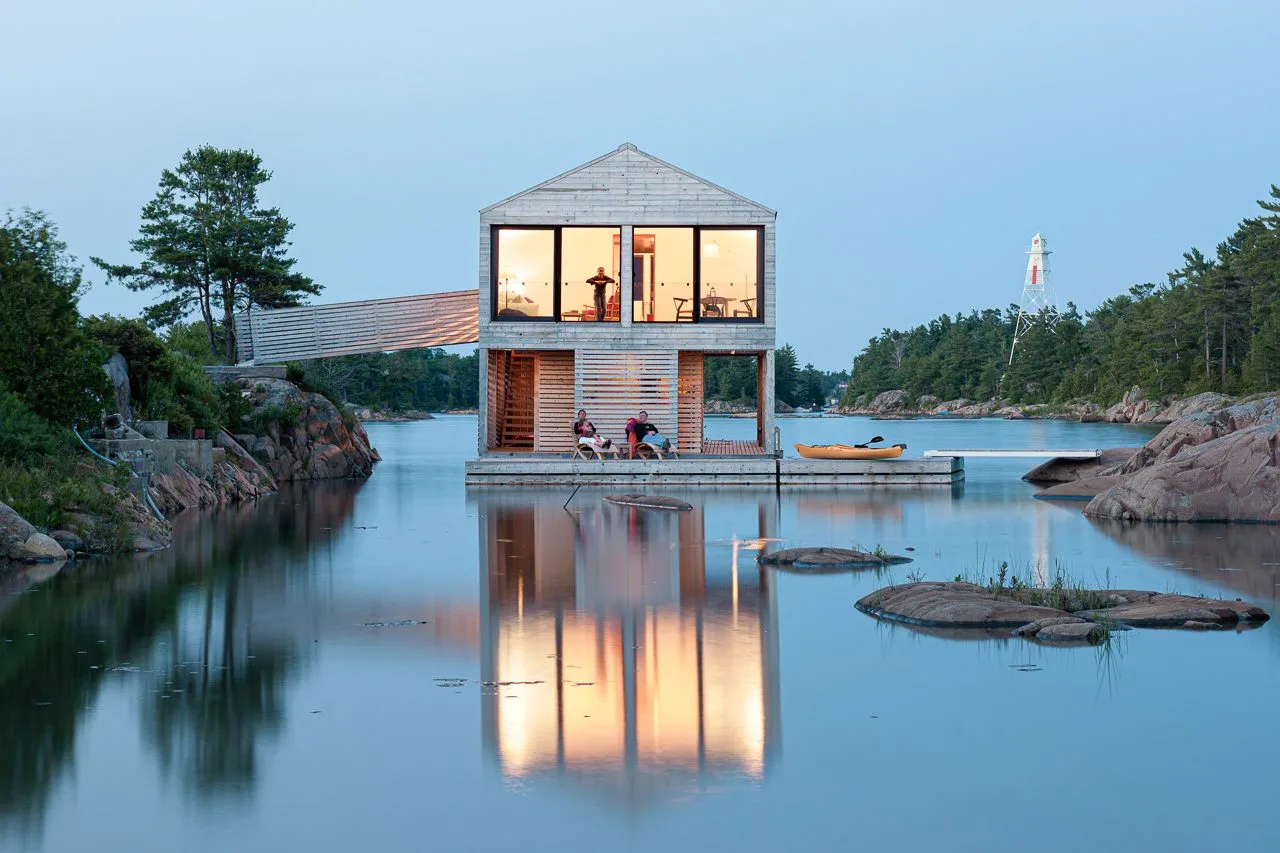
This remarkable floating house was designed to offer its owners a summer escape like no other. Designed by New York’s MOS Architects, this two-storey retreat rests atop a series of steel pontoons, allowing it to sit gracefully on the surface of Lake Huron, one of North America’s magnificent Great Lakes.
What makes this house truly special is its ability to adapt to the ever-changing character of the lake. Lake Huron is known for its dramatic water level fluctuations, shifting month to month and year to year. While traditional lakefront homes struggle with these unpredictable changes, this house takes a different approach: it floats. By resting on a pontoon structure, the home simply rises and falls with the water, making it as dynamic as the environment it inhabits.
Constructing this house on the water was no easy task. The site’s remote location meant that traditional on-site building methods would have been incredibly difficult, expensive, and wasteful. Transporting materials to such an isolated part of the lake would have consumed huge amounts of energy, not to mention cost a fortune.


Instead, MOS Architects embraced a more inventive strategy. The house was constructed in a more accessible location near the shore, where resources and tools were readily available. Once completed, the structure was carefully towed across Lake Huron to its final home—traveling about 50 miles along the water before reaching its anchoring point. This unconventional process not only made construction more efficient but also kept the environmental footprint lower than if the team had attempted a traditional build on-site.
The exterior of the floating house is clad in a rainscreen made of cedar planks, a material chosen for both its beauty and its practicality. Red cedar is widely used in the region because it’s abundant, economical, and durable—able to withstand the tough climate of the Great Lakes.
The design cleverly varies the spacing between the cedar boards depending on the needs of each space. In areas where privacy is essential, the planks are arranged more densely. In spots where natural light and views are prioritized, the gaps widen to create a lighter, more open feel. This rainscreen not only wraps the walls of the home but also extends across the roof and exterior spaces, tying the whole structure together in a warm, natural skin.


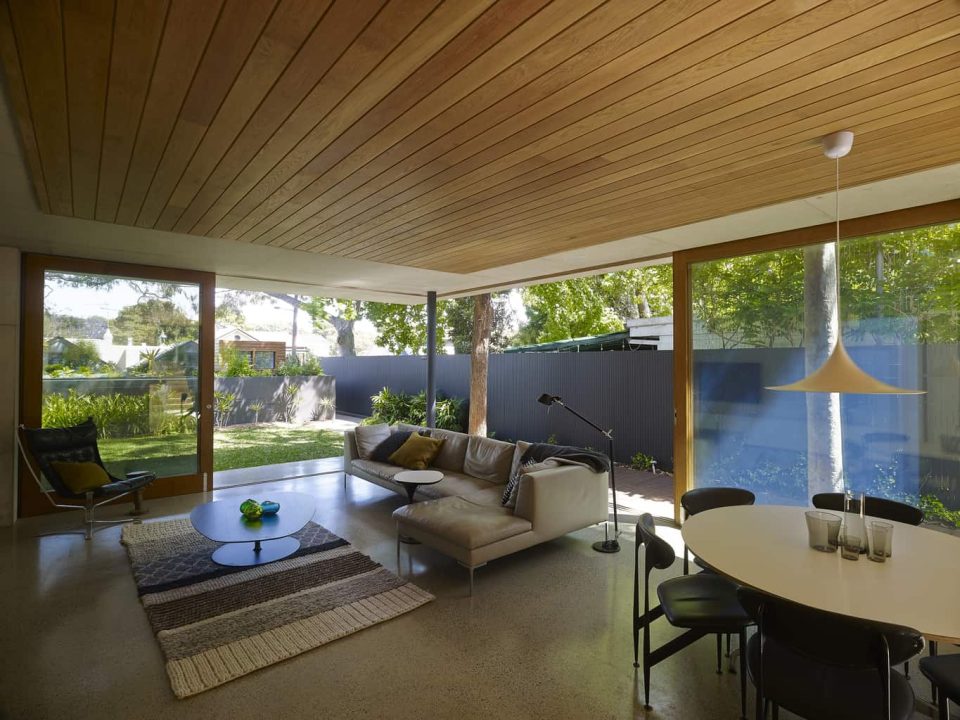
Step inside, and the interior continues the story of warmth and practicality. Wood is everywhere—underfoot, across the ceilings, and even in the furniture and cabinetry. The architects leaned into the simplicity of natural materials, creating a cohesive and inviting atmosphere. Even the bathroom celebrates wood, with a custom wooden sink and bathtub that feel both rustic and luxurious.
The layout of the home is smart and straightforward. The lower level functions as the hub for lakeside living, with a dock, boat storage, a washroom, and even a sauna—perfect for warming up after a chilly swim. Bridges connect this level, and the one above, to the shore, ensuring easy access without breaking the illusion of being adrift on the lake.
On the upper floor, the heart of the house is the kitchen, which acts as the central artery linking the different spaces together. To one side sits the lounge, perfect for long, lazy afternoons overlooking the water. To the other side is the bedroom, a peaceful retreat that makes the most of the lake views. Between them, an office, bathrooms, and storage spaces are neatly tucked in, keeping the design functional without sacrificing comfort.


What makes this project so compelling is that it’s not just a cabin on a lake—it’s a floating house that redefines the relationship between architecture and nature. Instead of trying to resist the forces of the environment, it embraces them. The rising and falling of Lake Huron isn’t a problem to solve, but rather a rhythm to live in harmony with.
For its owners, this means every stay at the cabin is a reminder of the delicate balance between human habitation and the natural world. The house is rooted in practicality but wrapped in warmth and simplicity, offering a lifestyle that’s as inspiring as it is relaxing.
In many ways, this floating house is more than just a summer getaway. It’s an experiment in sustainable living and adaptive design—a place where architecture literally moves with nature rather than against it.